
A kayak is great when you need it but it can be some trouble to transport a kayak and gear in the back of a pickup truck. Many kayaks don’t have flat bottoms so you can’t just sit the kayak in the truck bed without some support. The kayak will just toss and roll around and can ding the inside of the bed. A kayak rack is a better option than just throwing your yak in the truck bed. A truck rack gets a kayak up and out of the way and makes room for more gear and better organization. In this article, we will go over the best way to haul kayaks in a truck.
How to secure a kayak in a truck bed?
To secure a kayak in a truck bed, all you need is a good ratchet strap to keep it tight and secure. The kayak should be placed in the center of the bed, on top of a bed liner or foam padding. Tie down straps should then be placed over the kayak and tightened. Make sure the straps are secured to the bed anchor points and the kayak is snug and secure. Once all straps are secure, you can now safely and securely transport your kayak.
How far can a kayak stick out of a truck bed?
Depending on the size of your kayak, it can stick out anywhere from a few inches to up to 4 feet from the back of your truck bed. It is important to make sure that the kayak will be secure and will not be able to slide off while driving. Additionally, you may want to use tie-down straps to ensure that the kayak is secure and won’t be damaged while in transit. If the kayak sticks out over 4 feet from the end of your truck bed you must use a safety flag.
How do you transport a kayak on a truck without a rack?
A kayak rack for a truck is a great way to safely and securely transport your kayak. A kayak rack for a truck typically consists of two mounts that attach to the bed of the truck and a crossbar that is designed to hold the kayak in place. This is the safest and most secure way to transport a kayak on a truck as it keeps the kayak from sliding around in the bed of the truck and from potentially falling off. If you do not have a kayak rack for your truck, a possible alternative is to use ratchet straps to secure the kayak to the truck bed. This involves wrapping the straps around the kayak and latching it to the truck bed. However, this method is not as secure as a kayak rack and may not be recommended.
How to transport two kayaks in a truck?
Transporting two kayaks in a truck is easy with a kayak rack. There are many styles of kayak racks available, depending on the make and model of your truck. Many racks mount to the truck’s bed rails, while others may require drill-in installation. The racks are designed to securely hold the kayaks in place as you drive, and often have additional security straps to ensure extra stability. Additionally, some racks come with built-in tie-down points, allowing you to secure the kayaks in place with additional straps or ratchet straps. With the right kayak rack, loading up your truck with two kayaks is a breeze.
Best Kayak Racks for Trucks
Bed rails kayak rack
This type of kayak rack is attached to the bed rails of a truck. It is a simple system that holds the kayaks above the cargo area on curved cross members in place with straps.
Truck Bed Kayak Rack
This type of kayak rack is a platform that sits in the bed of a truck. It is a simple system that holds the kayaks in place with straps.
There is also a truck bed mounted kayak rack. This type of kayak rack is a platform that is bolted to the bed of a truck. It is a more permanent system that holds the kayaks in place with straps.
A Stake pocket kayak rack is also a truck bed option. The stake pocket is the hole in the top of your trucks bed rail. This rack holds the kayaks above the truck bed to allow for storage underneath.
Bed Extenders
It would be nice if you could haul a kayak in the truck bed with the tailgate up. However, most kayaks just won’t fit like that. If you have a truck, you can buy bed extenders which will increase the amount of space in the bed of your truck. This can be helpful for transporting kayaks, canoes, or other large items. Basically, these bed extenders work with your tailgate down to provide extra storage room and overall length of usable bed space.
Roof Racks for Kayaks
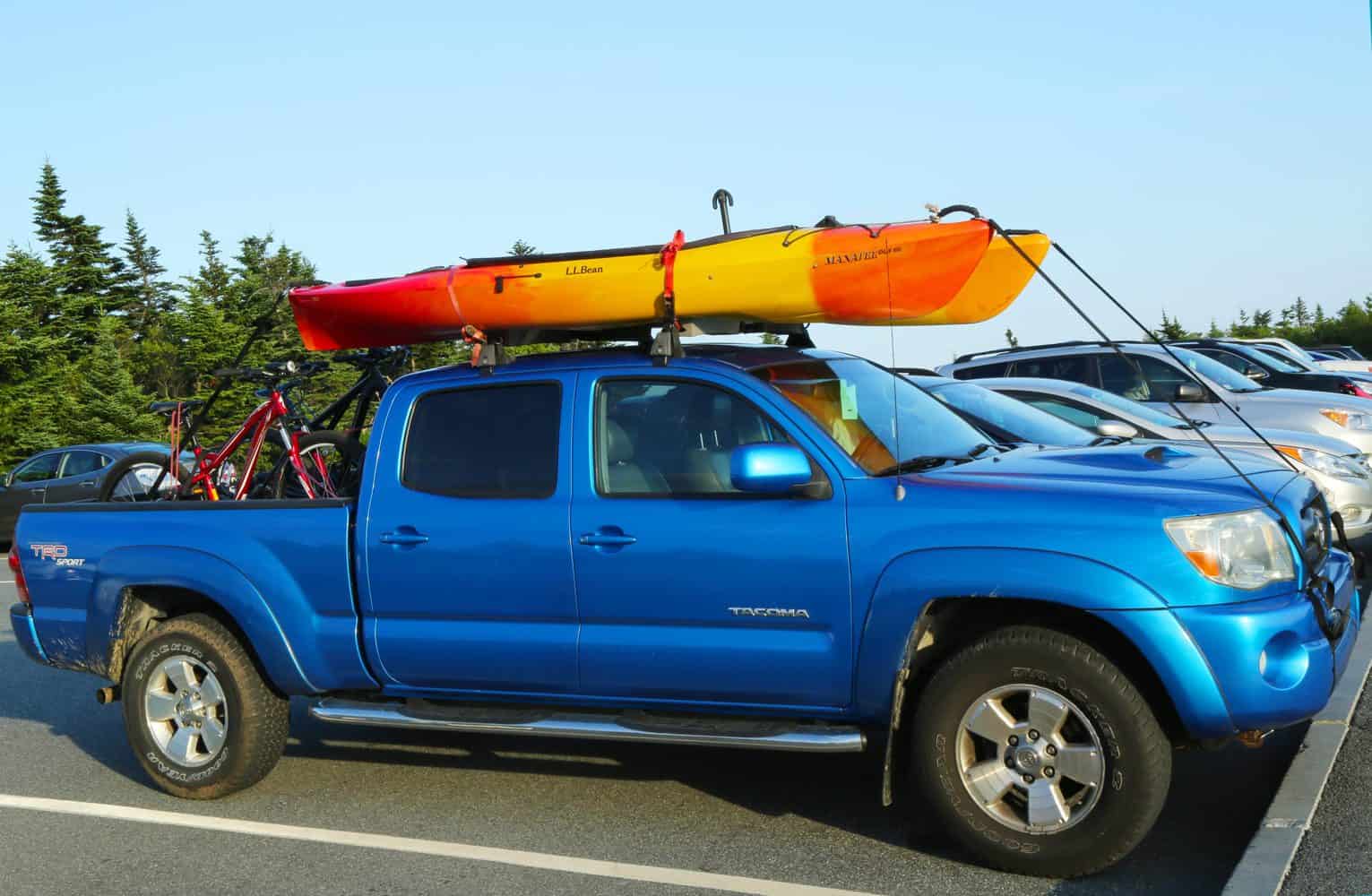
A kayak rack for a truck can be a great way to transport your kayak. There are a few different types of kayak racks that can be installed on a truck. One type of kayak rack is a system that mounts to the roof of the truck. This type of rack is good for transporting multiple kayaks. It may not be the best choice though if your vehicle has high ground clearance because the kayaks will be hard to reach. It is important to choose the right type of rack for your needs. Kayak roof rack pads may also be needed to protect your kayak from damage while transporting.
There are also some kayaks racks for camper shells. These racks work similarly to a roof rack just that they are on top of a camper shell instead.
Hitch mounted racks
This type of rack is attached to the hitch of the truck and can hold multiple kayaks. It is important to make sure that the rack is securely attached to the truck so that the kayaks will not fall off.
Buying Kayak Racks: Things to Consider
Your Vehicle’s Base Roof Setup
Before you purchase a kayak rack for truck, you need to first determine if your vehicle’s base roof setup will work with a rack. Most rack systems are designed to work with bare roofs, but if you have a roof rack, crossbars, or rails installed, you will need to purchase a rack system that is compatible with those accessories.
If you do not have a roof rack, crossbars, or rails installed on your vehicle and you are not interested in installing them, we recommend the Yakima HoldUp Hitch Rack. This rack system is designed to work with 2” hitch receivers and it includes all of the necessary hardware for installation.
If you have a roof rack, crossbars, or rails installed on your vehicle, we recommend the Yakima RidgeLine Hitch Rack. This rack system is designed to work with 2” hitch receivers and it includes all of the necessary hardware for installation.
If you are not sure if your vehicle has a roof rack, crossbars, or rails installed, please consult your vehicle’s owner’s manual or contact your vehicle’s manufacturer.
Weight Capacity
make sure your kayak rack is rated for the amount of weight you plan to put on it, always buy a bigger weight rated rack than a smaller one. That will give you the ability to carrier a bigger heavier kayak or two. As you get more into the sport you may see the need for a larger kayak such as a fishing kayak.
Number of Kayaks You Plan to Carry
The weight capacity of the kayak rack for truck will depend on the number of kayaks you plan to carry. If you are only looking how to transport two kayaks in a truck, most racks will be able to handle the weight. However, if you are carrying more than two kayaks, you will need a rack that has a higher weight capacity.

Aerodynamics of a kayak rack
Racks that are mounted on the roof of a truck can create drag and turbulence as the truck moves through the air. This drag can increase the fuel consumption of the truck, and can also cause the truck to lose speed and stability. In addition, racks that are mounted on the side of a truck can block the airflow around the truck, which can also lead to increased drag and decreased fuel efficiency.
All of these factors should be taken into consideration when choosing a kayak rack for a truck. If fuel efficiency is a concern, then a rack that is mounted on the roof of the truck may be a better option. If stability is a concern, then a rack that is mounted on the side of the truck may be a better option.
No-drill Kayak Rack for Truck
If you don’t want to drill into your truck, you can try using a product like the Yakima HullRaiser. This product uses a clamp system to attach to your truck without drilling. It can hold up to two kayaks and is adjustable to fit a variety of truck sizes. Most of the no drill kayak racks involve some sort of rail system with a variety of clamps that can attach to the rail or track.
If you decide to go with a pre-made rack, there are a few different options to choose from. The most popular option is the Thule rack. This rack is adjustable to fit a variety of truck sizes, and it can hold up to three kayaks. It is also easy to install, and it comes with all the hardware you need.
Removable Kayak Rack for Truck
Kayak racks are great when you’re outdoors heading to your favorite paddling place, but what about after that? That’s why there are removable kayak racks.
One type of removable kayak rack is a rack that attaches to the roof of your truck. This type of rack typically has two or four arms that extend from the roof of your truck. The kayaks are then attached to the arms with straps or ropes. The removable option is nice when you have to go under parking decks or other low clearance areas.
Another type of removable kayak rack is a rack that attaches to the trailer hitch of your truck. This type of rack typically has two or four arms that extend from the trailer hitch of your truck. The kayaks are then attached to the arms with straps or ropes.
Conclusion
So we want to know the best way you haul kayaks in your truck. Let us know in the comments section.
Introduction (150 words)
Kayaking is a thrilling and adventurous water sport that allows you to explore scenic waterways and experience nature up close. If you’re a kayak enthusiast and own a truck, you have the advantage of easily transporting your kayak to different locations. However, it’s crucial to know the best way to haul kayaks in a truck to ensure their safety and maintain the integrity of your vehicle. In this comprehensive guide, we will explore various methods, equipment, and essential tips for hassle-free and secure kayak transportation. Whether you’re a seasoned kayaker or a beginner, this article will provide you with valuable insights to make your next kayaking adventure a breeze.
- Choosing the Right Truck (200 words)
Before delving into the hauling methods, it’s essential to consider your truck’s suitability for transporting kayaks. Look for a truck with a sturdy and spacious bed, preferably one that can accommodate the length of your kayak(s) comfortably. Trucks with a higher payload capacity and tie-down points are also advantageous. Additionally, consider bed liners or kayak racks designed specifically for your truck model to protect both your kayak and the truck bed from scratches or damage.
- Utilizing Kayak Racks (400 words)
One of the most popular and convenient methods to haul kayaks in a truck is by utilizing kayak racks. These racks come in different styles, including bed racks, roof racks, and hitch-mounted racks. Here’s an overview of each type:
a. Bed Racks: Bed racks are ideal for trucks with an open bed. These racks mount to the bed sides and provide a secure base for transporting kayaks horizontally. Ensure the rack is compatible with your truck’s dimensions and opt for additional accessories like padding or straps for added protection.
b. Roof Racks: Roof racks are a great option if you need to transport multiple kayaks or have a smaller truck bed. Install crossbars on your truck’s roof and then attach kayak-specific racks to secure your kayaks vertically. It’s crucial to consider the height restrictions and ensure your truck can safely navigate low-clearance areas.
c. Hitch-Mounted Racks: Hitch-mounted racks attach to your truck’s hitch receiver. They are suitable for trucks without a bed or roof rack options. These racks can carry multiple kayaks and are easily accessible, but they may limit rearview visibility.
- Securing Kayaks Safely (400 words)
Once you’ve chosen the appropriate rack for your truck, securing your kayak properly is essential to prevent any accidents or damage during transportation. Here are some key tips to ensure a secure hauling:
a. Use High-Quality Straps: Invest in high-quality, durable straps specifically designed for securing kayaks. Avoid using bungee cords as they can stretch and become loose over time.
b. Positioning and Padding: Place your kayak centrally on the rack, ensuring it’s well-balanced. Use foam blocks or kayak-specific padding to protect your kayak from scratches or pressure points.
c. Tightening and Checking: After securing the kayak, tighten the straps firmly, but be careful not to overtighten and damage the kayak. Periodically check the straps during transportation to ensure they remain secure.
d. Flagging: If your kayak extends beyond the bed or roof of your truck, attach a bright-colored flag to make it more visible to other drivers, enhancing road safety.
- Additional Precautions and Tips (250 words)
In addition to the primary hauling methods and securing techniques, here are some additional precautions and tips to enhance your kayak transportation experience:
a. Weight Distribution: Ensure that the weight of your kayak is evenly distributed to prevent unnecessary strain on your truck’s suspension system. Refer to your truck’s manual for the recommended payload capacity.
b. Slow and Steady: Drive at a moderate speed, especially when transporting kayaks on the roof, to reduce wind resistance and maintain stability.
c. Regular Inspections: Inspect your truck’s tie-down points, straps, and racks regularly to ensure they are in good condition and can securely hold the kayaks.
d. Local Laws and Regulations: Familiarize yourself with local laws and regulations regarding kayak transportation, such as flagging requirements or restrictions on extended loads.
Conclusion (150 words)
Properly hauling your kayaks in a truck is crucial for a safe and enjoyable kayaking adventure. By selecting the right truck, utilizing kayak racks, and following secure tie-down techniques, you can transport your kayaks with confidence. Remember to prioritize safety, regularly inspect your equipment, and comply with local laws to ensure a hassle-free journey. Whether you’re heading to a nearby lake or embarking on a cross-country kayaking trip, the best way to haul kayaks in a truck is to plan ahead, invest in quality equipment, and take necessary precautions. With these tips in mind, you’ll be well-prepared to transport your kayaks and explore the great outdoors to your heart’s content.